The 10-yard container measures roughly 12 feet long, 8 feet wide, and 3.5 feet tall, so it tucks onto one car-length of driveway - a real advantage on the narrow lots and shared drives common in Cabbagetown, Inman…
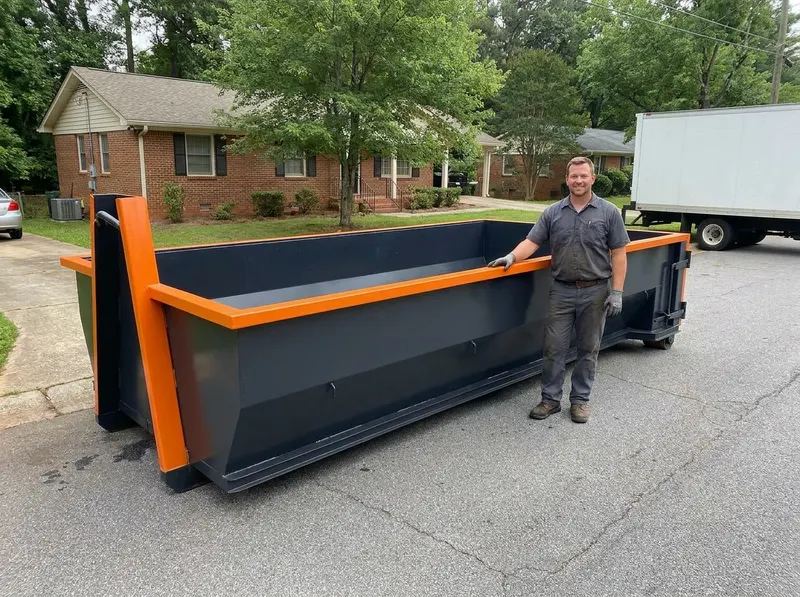
The 10-yard container measures roughly 12 feet long, 8 feet wide, and 3.5 feet tall, so it tucks onto one car-length of driveway - a real advantage on the narrow lots and shared drives common in Cabbagetown, Inman Park, and Old Fourth Ward. Its low walls let you walk debris in rather than heave it overhead, which matters for a bathroom tear-out or a packed garage in Buckhead where the debris is heavy but not high in volume. For jobs in the historic districts around Grant Park and Oakland Cemetery, the shorter footprint also clears tree limbs and low power lines on delivery.
Choosing the right size comes down to debris type and volume.
Step 1: estimate your piles in pickup-truck loads. The 10-yard holds about 4 loads and suits a single-room remodel, a roof section, or a one-car-garage cleanout; the construction and demolition debris from a full-house renovation usually pushes you into the 20-yard ($695) or 30-yard ($795). Step 2: weigh the material - the 10-yard is ideal for dense, heavy loads like dirt, concrete, brick, or asphalt roofing, because a small heavy load stays well under weight limits that would penalize a larger, cheaper-looking bin elsewhere.
Step 3: if you are mixing light bulky junk like furniture and cardboard with heavy debris, the 15-yard ($650) buys headroom for about 6 loads. The trade-off is simple: a 10-yard saves driveway space and money on dense debris, while a larger bin saves trips on high-volume light junk.
A dumpster rental is not junk removal - the crew drops the empty container and you (or your contractor) load it, which keeps the price flat at $595. Powerhouse Dumpster Rental delivers the bin, and you have the included rental window to fill it before pickup.
Accepted material follows standard municipal solid waste rules: general renovation and household debris go in, but household hazardous waste such as paint, solvents, oil, pesticides, and used batteries stays out, as do tires, mattresses on some loads, appliances with refrigerant, and electronics - local recycling and reuse options handle those separately. Contractors loading drywall or treated lumber should follow OSHA jobsite debris-handling practices and keep the load level with the top rail so it can be safely tarped and hauled.
Placement matters on Atlanta's tight streets. On a private driveway in Kirkwood or West End, no permit is needed.
If the only spot is the public street or a right-of-way - common on the dense blocks near Ponce City Market and the Atlanta BeltLine in East Atlanta Village - the City of Atlanta typically requires a right-of-way or obstruction permit through city planning, and Fulton County rules apply outside city limits. Plywood under the container protects pavers and decorative concrete driveways around Midtown lofts. For general waste and recycling guidance, the Atlanta Department of Public Works and Georgia Environmental Protection Division list what the state keeps out of landfills.
Every job gets a firm, written price after an on-site visit.
Tell us about your 10-yard dumpster rental job in Atlanta and we'll send a clear, written quote, usually the same day.
 Powerhouse Dumpster Rental