A 30-yard roll-off measures roughly 22 feet long, 8 feet wide, and 6 feet tall, holding about 30 cubic yards, the equivalent of 9 to 12 standard pickup loads. It is the second-largest container in the lineup, sitting…
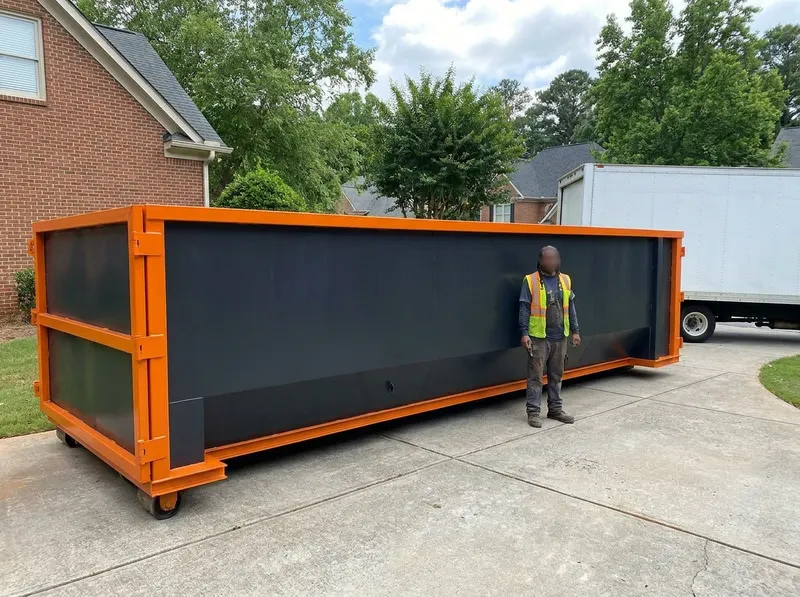
A 30-yard roll-off measures roughly 22 feet long, 8 feet wide, and 6 feet tall, holding about 30 cubic yards, the equivalent of 9 to 12 standard pickup loads. It is the second-largest container in the lineup, sitting between the 20-yard at $695 and the 40-yard at $895. The 30-yard suits whole-house cleanouts, full-home remodels, and single-layer roof tear-offs where debris volume is high but the weight stays manageable; dense material like concrete, brick, and dirt is better matched to a smaller box because of how heavy it loads. Step 1, call or text a photo of the job. Step 2, confirm the flat $795 price and a drop-off window. Step 3, clear a spot roughly 60 feet long for the truck to tilt and roll the container off. Step 4, load it. Step 5, call for pickup when the project wraps. The container door swings open at the back so bulky items like old cabinets, sofas, and bathtubs can be walked in rather than lifted over the wall.
Driveway and street space decide a lot in Atlanta's older neighborhoods. In Grant Park, Cabbagetown, and Inman Park, where lots are narrow and street parking is tight, the 30-yard's 22-foot footprint needs a planned spot, a wide driveway or a cleared stretch of curb. In Buckhead and parts of Midtown with longer driveways, the full length drops with room to spare. For renovation and roofing jobs in Virginia-Highland, Kirkwood, East Atlanta Village, Old Fourth Ward, and West End, the 30-yard handles a multi-room gut plus flooring and trim in a single haul instead of two trips with a 20-yard. A placement on a public street or sidewalk typically requires a right-of-way permit from the City of Atlanta, while a private driveway or lot usually does not.
Prohibited items stay out of every container regardless of size: wet paint, motor oil, tires, batteries, and appliances with refrigerant. The U.S. Environmental Protection Agency classifies paint, solvents, and automotive fluids as household hazardous waste, which the Environmental Protection Division routes to separate collection rather than landfill roll-offs. Shingles, lumber, drywall, and general construction and demolition debris are accepted, and roofing crews should follow OSHA fall-protection rules when loading from height. Mattresses and tires can sometimes be included for a separate disposal fee, ask when booking. For reuse and recycling options on usable building materials, Earth911 and Habitat for Humanity ReStore list local drop-off points across metro Atlanta. Fulton County operates under Georgia solid-waste rules set by the Georgia Environmental Protection Division, and landfill tonnage charges are built into the flat $795 rather than billed after.
Every job gets a firm, written price after an on-site visit.
Tell us about your 30-yard dumpster rental job in Atlanta and we'll send a clear, written quote, usually the same day.
 Powerhouse Dumpster Rental